Smaller-capacity primary power for point-of-use and deployable applications.
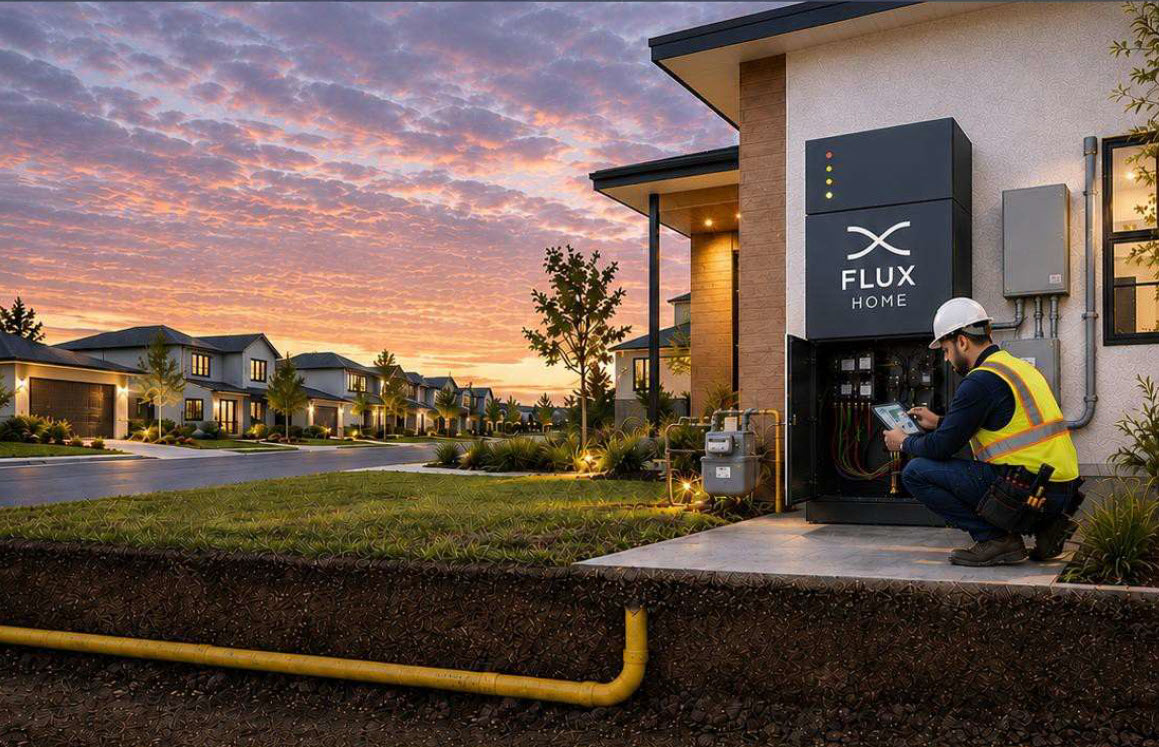
FLUX extends GTG's power portfolio below large-scale data center and industrial applications, organized into two channels: FLUX Home, point-of-use power for homes and everyday commercial sites, and FLUX Ember, deployable power for high-rises and emergency response.
Residential, new construction & builders/developers, telecom towers, gas stations & convenience stores, Native American communities, and gas utility companies.
Explore FLUX Home → CHANNEL 2 · DEPLOYABLE POWERHigh-rise & multi-story critical building systems, plus rapid-deploy emergency response and disaster recovery operations.
Explore FLUX Ember →View Flux Power Introduction
A single point-of-use platform serving residential households, new construction, telecom towers, fuel retail sites, Native American communities, and gas utility subscriber programs.
Flux Home is your home's own silent power plant — running on natural gas 24/7 to deliver all the electricity you need as a true prime power solution, completely independent of electric utility failures.
For builders and developers, Flux Home solves a different problem: it lets new construction move forward without waiting on utility interconnection queues or grid-capacity limits, while giving buyers a differentiator most competing communities can't offer. The system is specified into the home at construction — installed alongside HVAC, plumbing and electrical — and its cost is rolled into the home price and financed through the buyer's mortgage, so there's no separate lease, utility deposit, or aftermarket sale to manage.
The fridge keeps food cold, the AC runs full blast, because Flux Home generates power right where you live. No waiting for repair crews or rate hikes.
Medical devices stay powered for peace of mind, kids continue to game or study without interruption, and your home office runs smoothly through any crisis. Your home becomes the safe-haven where your family thrives — no matter the storm outside.
Flux Home and a GTG Atmospheric Water Generator combine into a single off-grid utility platform for new residential construction — built for lots where an electric grid interconnection queue or well-drilling uncertainty would otherwise stall a build. Both systems are manufactured off-site, sited together in a shared, temperature- and humidity-controlled utility room, and monitored remotely after handoff.
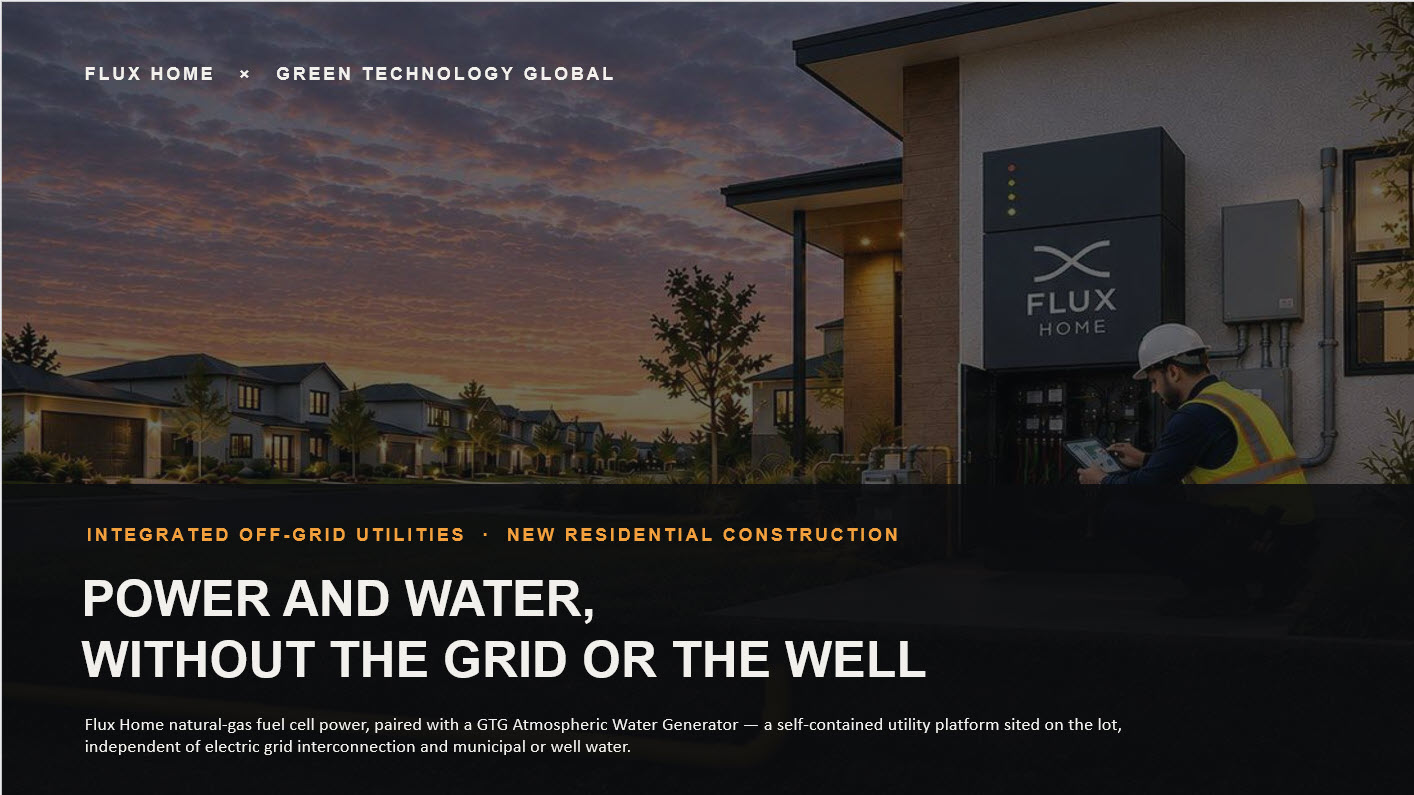
Natural-gas fuel cell, installed in about a day — no utility interconnection to wait on.
Draws moisture from air through 7-stage filtration — 250L or 500L daily capacity, no well required.
Both systems share a single temperature- and humidity-controlled utility room, sized to the home's plan.
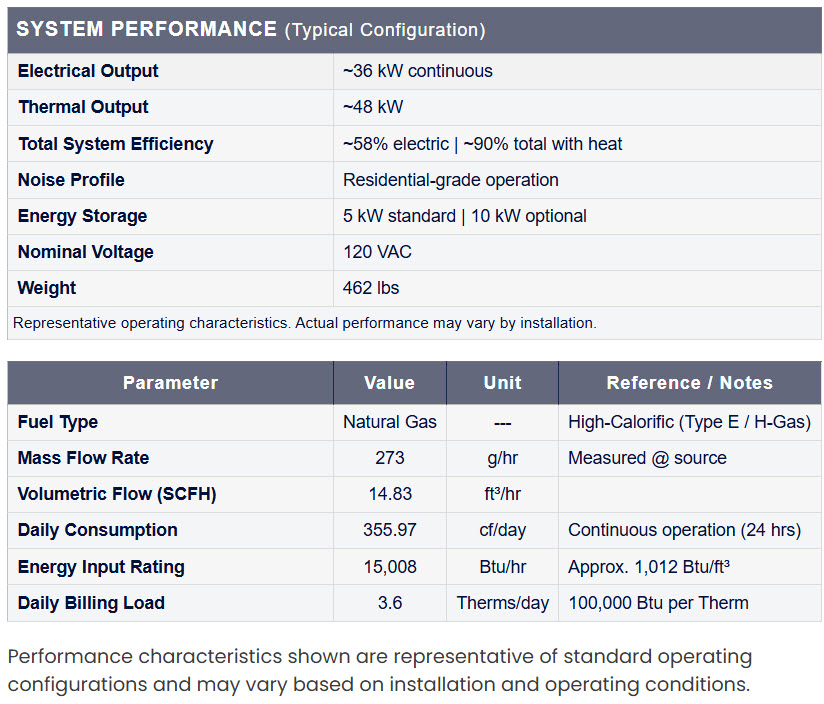
Flux Home is a solid oxide fuel cell (SOFC) that converts natural gas directly into clean electricity and useful thermal energy — quietly, continuously, and without combustion-engine noise or moving parts.
All of the Flux family of fuel cells can accommodate LP, NG / CNG / PNG / Bio-CNG / Methane.
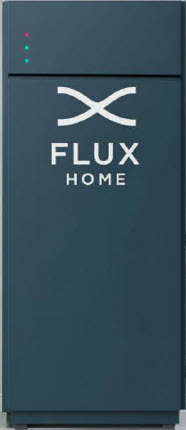
Measured at 10 ft — quiet enough for a garage or side yard.
Compact, indoor/outdoor-rated unit sized to your home's electrical panel.
A single unit delivers your household's continuous power draw.
| Technology | Solid Oxide Fuel Cell (SOFC) |
| Fuel source | Natural gas |
| Fuel consumption | ~0.35 m³/hr |
| Nominal voltage | 120 VAC |
| Current | Up to 40 A |
| Weight | ~600 lbs |
| Location | Indoor / outdoor rated |
| Certifications | UL 1741, UL 9540B, EN 50465 |
Output and consumption vary with site conditions, gas quality and system configuration.
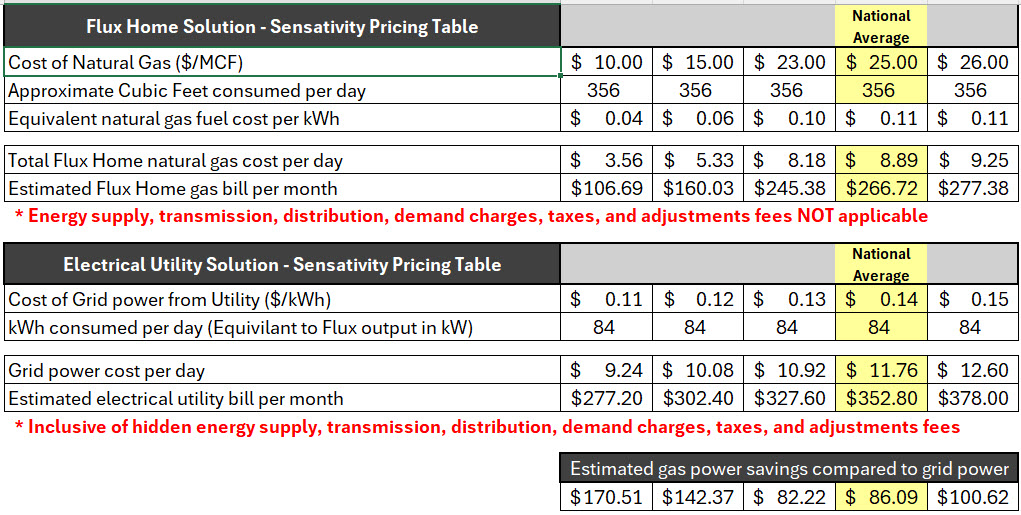
Running Flux Home on natural gas costs meaningfully less per month than buying the equivalent electricity from the grid — and gas pricing avoids the hidden supply, transmission, distribution, demand, and tax charges baked into a typical utility bill.
Numbers in blue can be changed by the viewer — enter your own gas price, gas consumption, grid rate and electricity use to see how the Flux Home Solution Sensitivity Table recalculates.
| Flux Home Solution — Sensitivity Pricing Table | Scenario 1 | Scenario 2 | Scenario 3 | Scenario 4 (National Avg) |
Scenario 5 |
|---|---|---|---|---|---|
| Cost of Natural Gas ($/MCF) | |||||
| Cubic Feet Consumed per Day | |||||
| Equivalent Natural Gas Cost per kWh | $0.0423 | $0.0635 | $0.0974 | $0.1058 | $0.1101 |
| Flux Home Gas Cost per Day | $3.56 | $5.33 | $8.18 | $8.89 | $9.25 |
| Estimated Flux Home Gas Bill per Month | $106.69 | $160.03 | $245.38 | $266.72 | $277.38 |
| Electrical Utility Solution — Sensitivity Pricing Table | |||||
| Cost of Grid Power ($/kWh) | |||||
| kWh Consumed per Day | |||||
| Grid Power Cost per Day | $9.24 | $10.08 | $10.92 | $11.76 | $12.60 |
| Estimated Electrical Utility Bill per Month | $277.20 | $302.40 | $327.60 | $352.80 | $378.00 |
| Estimated Gas Power Savings vs. Grid Power | $170.51/mo | $142.37/mo | $82.22/mo | $86.09/mo | $100.62/mo |
Illustrative only. Gas figures exclude energy supply, transmission, distribution, demand charges, taxes and adjustment fees; grid figures are inclusive of those hidden charges. Actual costs vary with local utility rates, gas pricing, home energy use and site conditions.
Fuel is only part of the picture. This calculator rolls in scheduled maintenance, monitoring, insurance and an overhaul reserve to show the full all-in operating cost per kWh — and how it stacks up against grid power.
Numbers in blue can be changed by the viewer. Enter your own unit profile, fuel, maintenance and grid assumptions to see the full-year operating cost and savings recalculate.
| Electrical output per day | 84.0 kWh |
| Annual electrical output | 30,660 kWh |
| Annual gas volume | 129.80 MCF |
| Fuel cost per year | $3,425.03 |
| Scheduled maintenance per year | $1,902.00 |
| Other O&M per year | $1,654.00 |
| Total operating cost per year | $6,981.03 |
| Operating cost per month | $581.75 |
| Operating cost per day | $19.13 |
| All-in operating cost per kWh | $0.2277 |
| Grid cost for same annual kWh | $4,292.40 |
| Annual savings vs. grid | -$2,688.63 |
| Monthly savings vs. grid | -$224.05 |
| Savings per kWh | -$0.0877 |
| Breakeven gas price ($/MCF) | $4.29 |
Operating cost only — excludes equipment purchase, installation and financing.
| Natural Gas Price ($/MCF) | Scenario 1 | Scenario 2 | Scenario 3 | Scenario 4 (National Avg) |
Scenario 5 |
|---|---|---|---|---|---|
| Natural Gas Price ($/MCF) | |||||
| All-In Operating Cost ($/kWh) | $0.1642 | $0.1854 | $0.2192 | $0.2277 | $0.2319 |
| Total Operating Cost per Year | $5,034.01 | $5,683.02 | $6,721.43 | $6,981.03 | $7,110.83 |
| Annual Savings vs. Grid | -$741.61 | -$1,390.62 | -$2,429.03 | -$2,688.63 | -$2,818.43 |
Sensitivity holds your unit profile, maintenance and O&M inputs fixed and varies only the natural gas price.
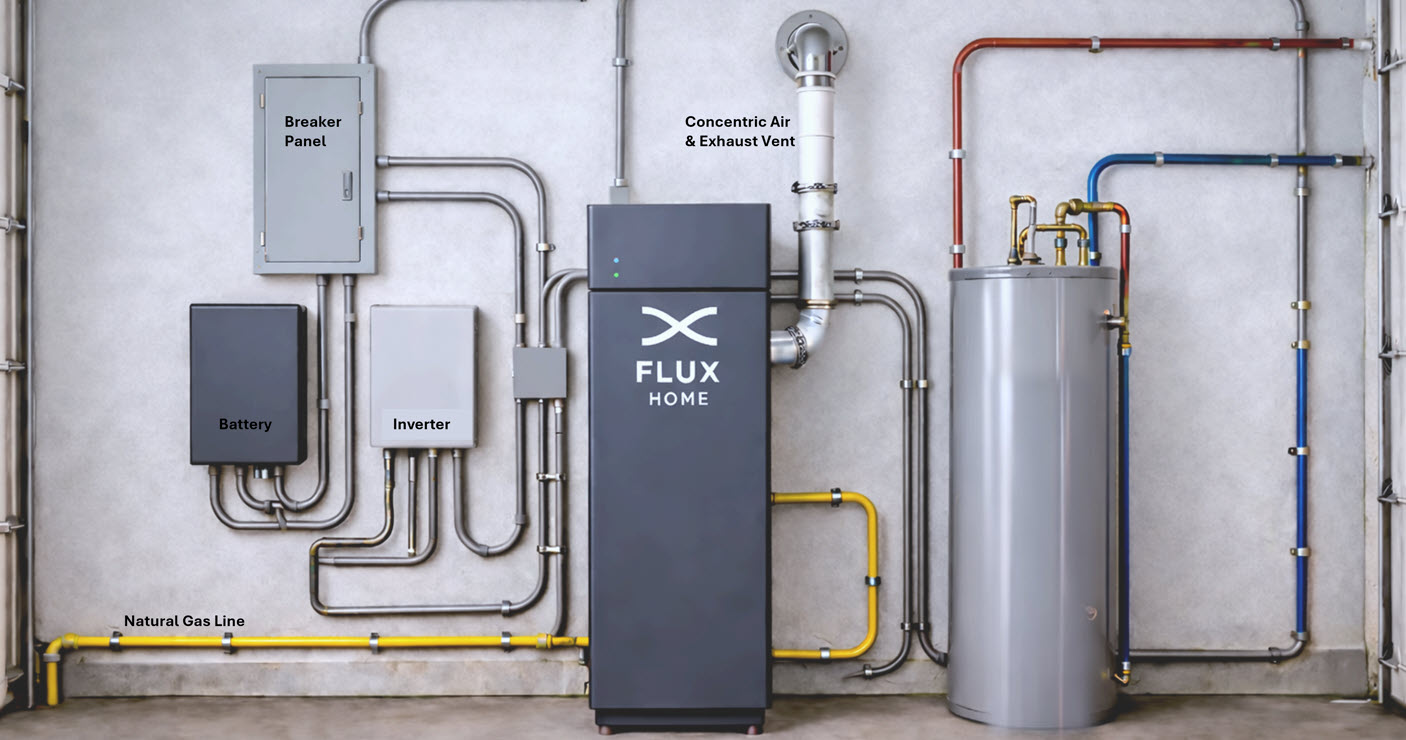
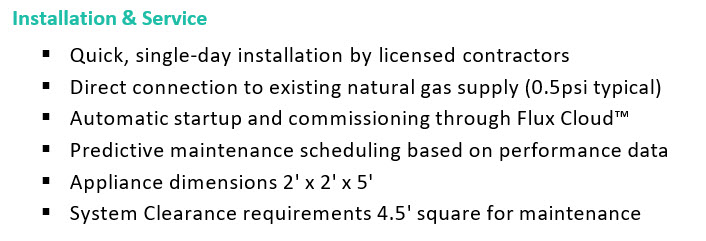
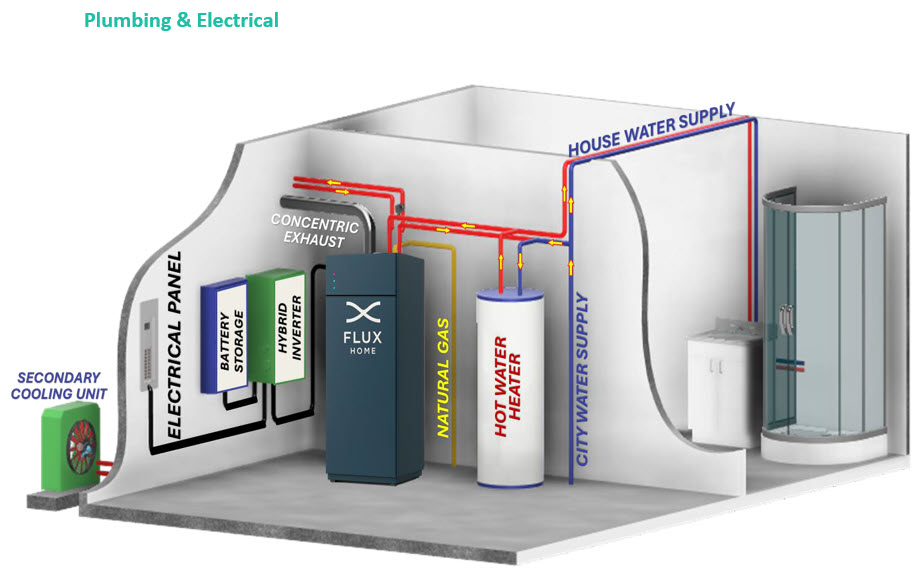
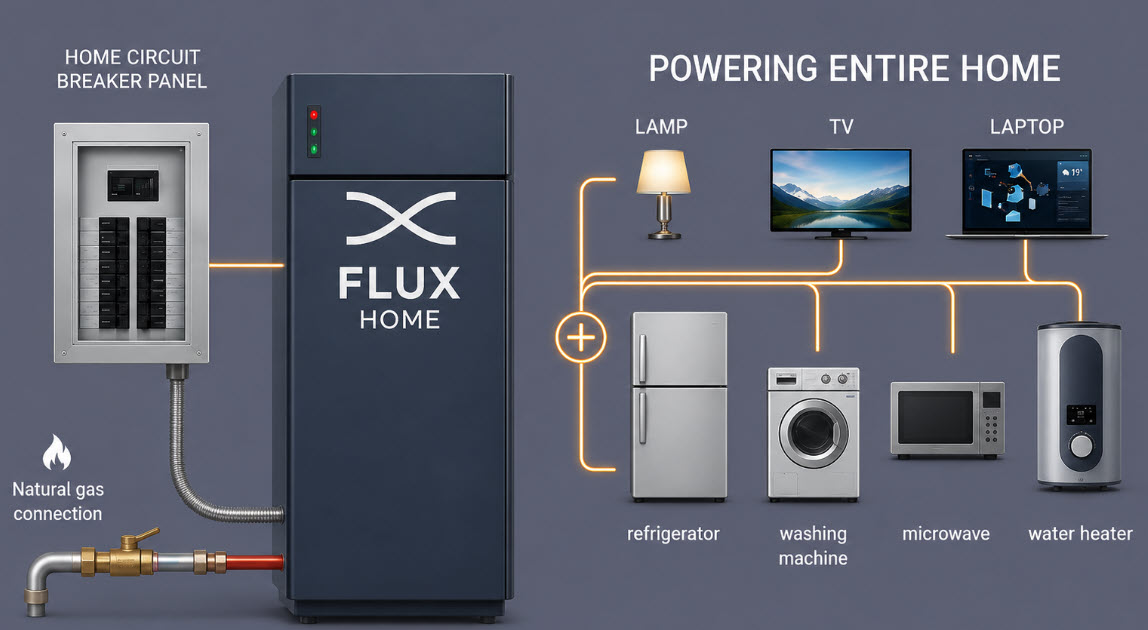
Flux Home runs on natural gas as a continuous, 24/7 prime power source — not a standby generator that only kicks in during an outage, but the home's primary electrical supply, independent of the utility grid entirely.
Our team reviews your home's electrical load, natural gas access, and installation location (garage-mounted units are common).
A Flux Home unit is sized to your household's continuous power draw, not just emergency backup loads.
Professional installation connects Flux Home to your home's electrical panel and natural gas line.
Flux Home runs continuously as your home's primary power source, rain or shine, grid up or down.
Flux Home isn't only a residential appliance — it's a subscriber program gas utilities can offer directly, turning the gas line already in the ground into a primary electricity source and taking continuous residential load off a grid they don't control.
A subscriber appliance fee layered on top of commodity gas revenue — a new line, not a substitute for one.
Every subscriber running on Flux Home as primary power is continuous load removed from a feeder the gas utility doesn't control.
Specified into new homes at construction, capturing the subscriber's primary power relationship before the electric utility ever does.
A single outage at a fuel retail site costs money twice — once at the pump, once in the cooler. Flux Home keeps card-payment pumps, POS systems and refrigeration running through every grid outage, from single forecourts to multi-bay travel centers.
When grid power drops, fuel dispensers lose the network connection needed to authorize credit and debit card sales.
Once power returns, pump controllers and card-payment systems can take roughly half an hour to reboot and resync before the pumps can sell fuel again.
Coolers, freezers and walk-ins start warming the moment the compressors stop, threatening dairy, deli and frozen inventory.
Lost fuel sales, lost in-store sales and spoiled product all compound for as long as the site stays down.
No loss of connectivity to reboot from, and no ~30-minute delay before the site can sell fuel by card again.
Compressors for coolers, freezers and walk-ins run without interruption, protecting dairy, deli, frozen and beverage inventory from spoilage losses.
Measured at 10 ft — quiet enough for customers fueling up nearby.
Installs on a small pad beside the store or the pump island.
Compact enough for tight, customer-facing forecourt lots.
| Diesel Generator | Flux Home | |
|---|---|---|
| Power generation | Combustion + moving parts | Electrochemical, no combustion |
| Noise near pumps & customers | 70–85 dBA typical | < 45 dBA at 10 ft |
| Maintenance | Frequent oil changes, servicing | Minimal moving parts |
| Fuel logistics | Scheduled diesel truck delivery | Runs on existing natural gas supply |
| Monitoring across a store network | Manual site checks | Remote telemetry & diagnostics |
Quieter operation keeps the forecourt pleasant for customers at the pump — and removes the noise complaints that limit where a genset can run.
Protect one location's pumps, POS and refrigeration with a single compact Flux Home unit.
Standardize backup power across a fleet of stores with the same remotely monitored platform at every site.
Storm-prone and grid-constrained areas see the fastest payback from eliminating repeated reboot and spoilage events.
Higher-load sites with larger walk-ins, food service and HVAC step up to Flux Ember for combined power and useful heat at truck-stop scale.
Continuous, clean power for telecom sites — even where the grid can't reach. FLUX Comm packages a right-sized, always-on 3kW continuous power generator for critical telecom infrastructure.
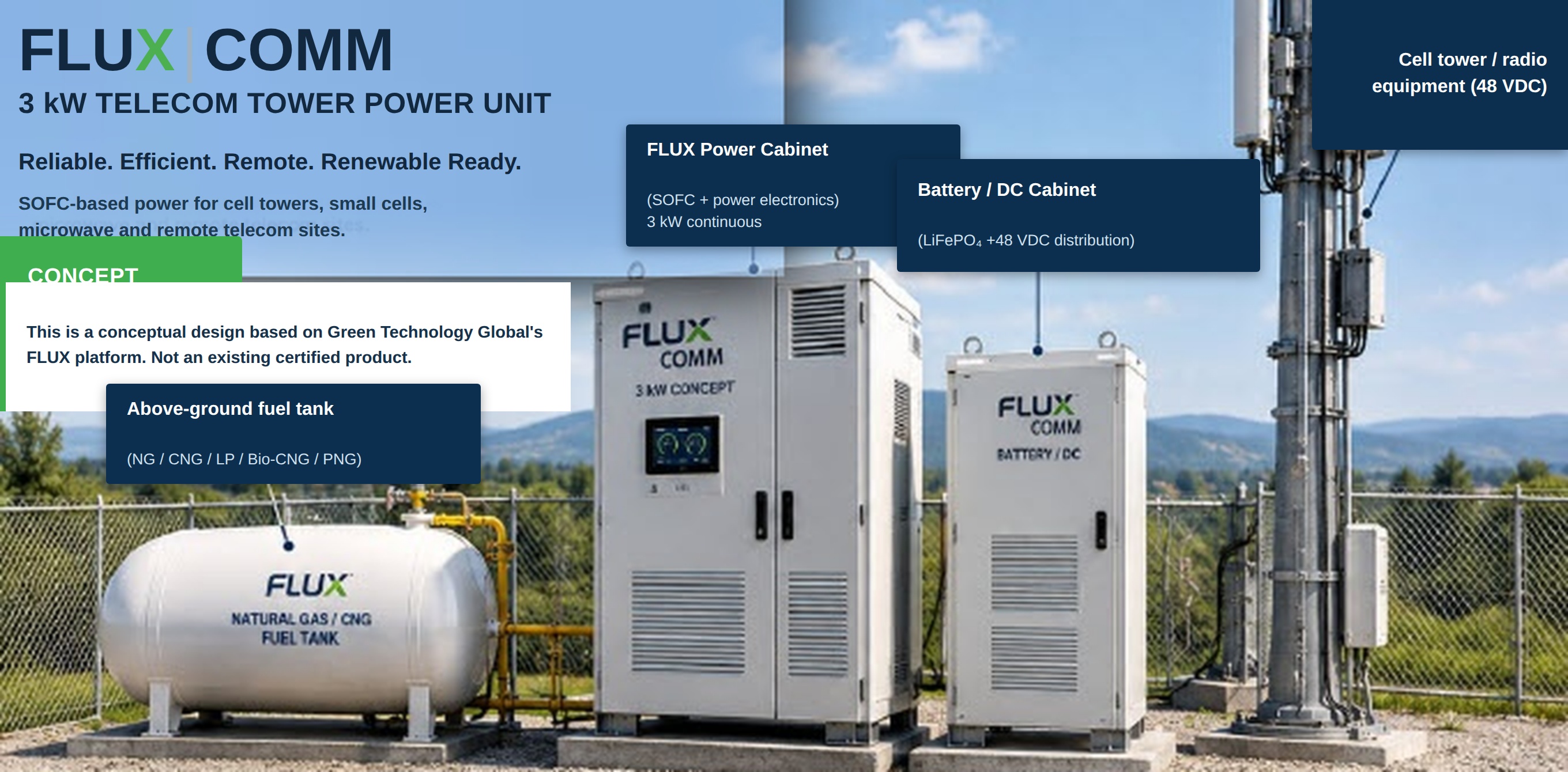
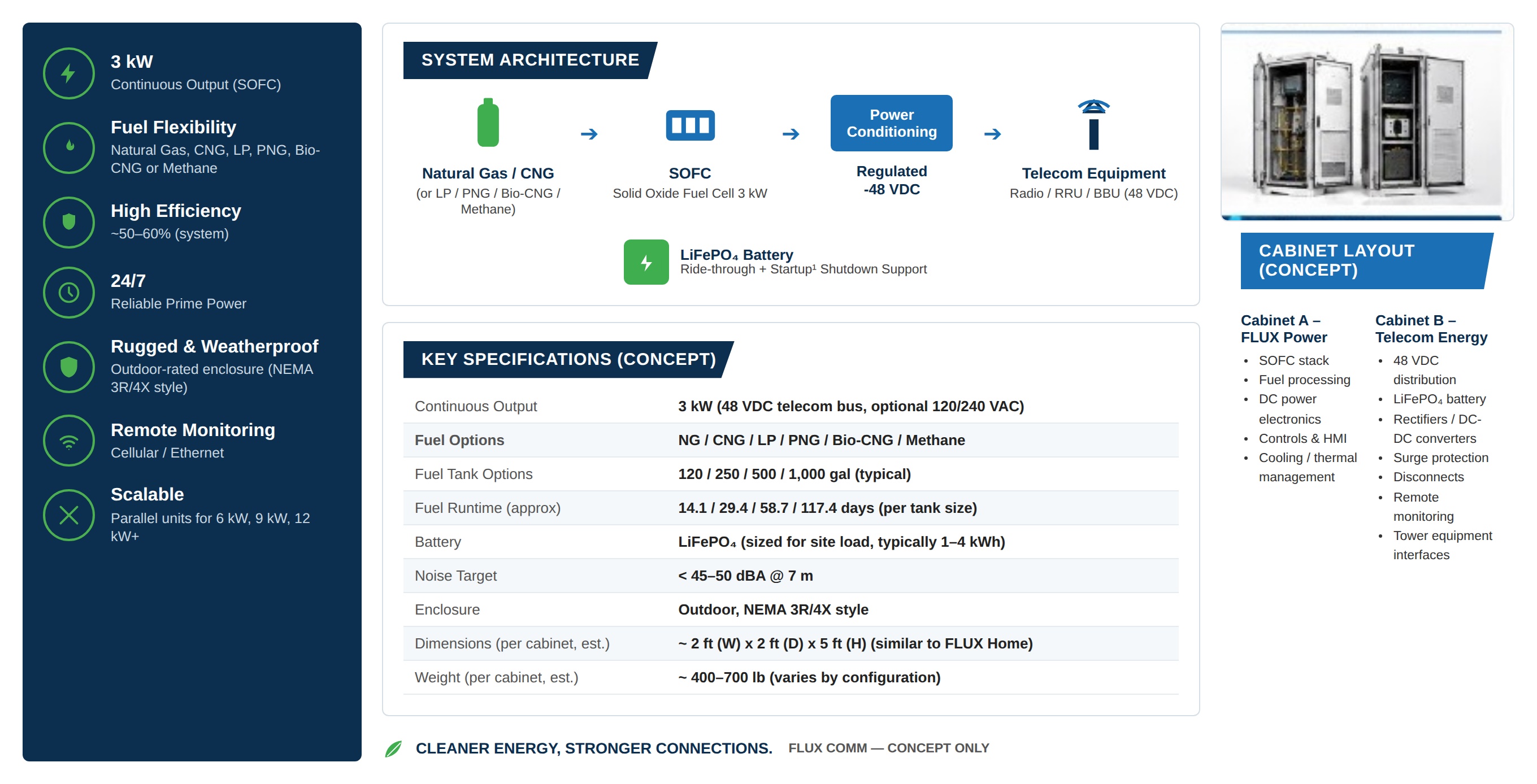
Many sites lack grid access or have insufficient capacity to support new telecom equipment.
Extending power infrastructure is expensive and slow, delaying site activation.
Power interruptions impact network performance, customer experience and revenue.
Extreme weather and remote locations demand rugged, reliable power solutions.
Deploy power where the grid can't go and activate sites in days — not months.
Avoid grid extension costs and reduce complexity with an all-in-one solution.
Fuel cell technology provides continuous power with fewer moving parts and less maintenance.
Engineered for 24/7 operation with remote monitoring and carrier-grade performance.
Provide primary power for new cell sites in remote areas where grid power isn't available.
Power temporary or rapidly deployed sites for events, emergencies or capacity support.
Deliver reliable power to backhaul radios, microwave sites and edge network infrastructure.
Restore and maintain connectivity when the grid goes down and communication matters most.
Runtime depends on site load and configuration.
| Tank Size | Tank Size (L) | Fuel (Gal) | Fuel (L) | Tank Dimensions | Runtime (Days) |
|---|---|---|---|---|---|
| 120 Gal | 454 | 96.0 | 363 | 24" dia × 56" lng | 14.1 |
| 250 Gal | 946 | 200.0 | 757 | 30" dia × 76" lng | 29.4 |
| 500 Gal | 1893 | 400.0 | 1514 | 37" dia × 97" lng | 58.7 |
| 1000 Gal | 3785 | 800.0 | 3028 | 41" dia × 167" lng | 117.4 |
Fuel cell technology delivers clean, uninterrupted power for critical telecom systems.
Engineered for harsh environments with extreme temperatures, dust and humidity.
Pre-integrated, factory tested, and ready for fast installation with minimal site work.
Real-time visibility and alerts to optimize uptime and simplify operations.
Clean, quiet operation that meets environmental requirements and community standards.
Right-size power today with the flexibility to expand as your network grows.
Flux Home brings affordable, independent electricity to homes and community facilities on tribal lands, sized to the situation on the ground: securing primary power in places the grid does not reach, or taking continuous residential load off an existing electric utility where service is already stretched thin.
Deployed as a subscriber's primary power source, Flux Home takes continuous household or facility demand off an electric utility whose lines and capacity on tribal lands are often limited, aging, or difficult to reinforce.
For homes, chapter houses, schools, and clinics beyond the reach of an electric interconnection, Flux Home runs on delivered or piped natural gas as a true off-grid prime power plant — not a backup generator.
Provides electricity for lighting, refrigeration, phone charging, TV, and other daily needs.
Supports healthier, safer, and more connected families and community facilities.
Delivers reliable power where grid access is limited or non-existent, and takes load off the grid where it does exist.
A proven, cost-effective solution deployable across homes, community buildings, chapter houses, schools, and health clinics.
✓ Flux Home power unit
✓ Installation kit
✓ Remote monitoring capability
✓ Commissioning support
✓ 1-year limited warranty
✓ Ongoing technical support
Tank sold separately — sized to each community's needs and runtime requirements.
| Tank Size | Fuel Capacity | Est. Runtime (single panel) |
|---|---|---|
| 120 gallons | 184.6 kg | 1 month |
| 250 gallons | 384.6 kg | 2 months |
| 500 gallons | 769.3 kg | 4 months |
| 1,000 gallons | 1,538.6 kg | 8 months |
We work with tribal leaders, developers, and investors to plan, deploy, and support Flux Home systems that meet each community's needs — from individual homes to essential community facilities — providing the planning, equipment, and ongoing support to turn opportunity into lasting impact.
Built for remote and challenging environments.
Designed for quick deployment with local partners.
Creates jobs, builds skills, and supports economic growth.
A deployable power platform for critical building infrastructure and disaster response — from primary power with battery backup in a high-rise mechanical room to a containerized unit staged for rapid deployment.
Primary power with battery backup for critical high-rise building systems — running on natural gas, independent of the electrical grid. Sized as FLUX Home for a single riser or small critical load, and FLUX Ember for whole-building or multi-tower critical load.
When grid power drops, elevators can strand occupants between floors and cut off egress for upper-level residents and tenants.
Fire pumps, smoke control, and stairwell pressurization depend on continuous power to protect occupants and meet code.
Domestic water booster pumps lose pressure to upper floors, while sump pumps stop — risking flooding in mechanical spaces.
Security systems, access control, lighting, and HVAC go down, disrupting tenants and building operations.
Cameras, access control readers, and intrusion detection all need continuous power to keep watching and controlling every entry point.
Electronic locks and card readers fail-safe or fail-secure when power drops — risking locked-out residents or unsecured doors.
Centralized HVAC, lighting and elevator control systems stop responding without continuous power to the building management system.
Intercoms, fire alarm monitoring and emergency communication systems depend on the same continuous power.
| Diesel Generator / UPS | FLUX Home / Ember | |
|---|---|---|
| Role | Emergency-only backup | Primary power, battery-backed |
| Response to outage | 10-60 second transfer delay | Seamless — battery buffers instantly |
| Runtime | Limited by onsite fuel or battery | Continuous, sized to the building |
| Noise | 70–85 dBA typical | < 45 dBA at 10 ft |
| Maintenance | Frequent testing, oil changes | Minimal moving parts |
| Emissions | Combustion exhaust | No combustion, no flame |
| Continuous output | 3 kW |
| Noise | < 45 dBA at 10 ft |
| Footprint (W×D×H) | 2' × 2' × 5' |
| Weight | ~600 lbs |
Ideal for elevator machine rooms, single-riser life-safety loads, or a dedicated mechanical closet.
| Peak output | 27 kVA |
| Energy available/day | 288 kWh |
| Useful heat recovered | 12.6 kW-th |
| Runtime, 1,000 gal tank | 29.2 days |
Packages generation, battery storage, and thermal recovery in one transportable unit for rooftop or grade-level mechanical yards.
Wi-Fi-based monitoring keeps building operators and facilities teams connected to every unit.
Continuous performance monitoring flags issues before they cause downtime to critical systems.
Operators retain visibility and control of every deployed unit across the property.
Built to integrate with open standards such as UDMI (Universal Device Management Interface), keeping the building vendor-neutral.
Certifications & compliance: UL 1741 (inverter safety for grid support), UL 9540B (battery safety compliance), and EN 50465 (electrical compatibility standard).
Protect elevators, life-safety systems and water pressure for residents on every floor.
Keep tenants working and building systems running through grid disruptions.
Serve retail, residential and office loads from a single dispatchable power platform.
Meet life-safety power needs where uninterrupted power is most critical.
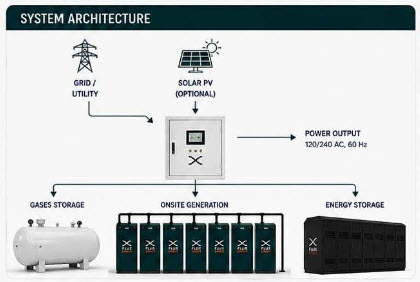
When the grid goes down entirely, Flux Ember brings the power infrastructure with you. It's a containerized, transportable energy platform that packages generation, battery storage, controls, and thermal-energy recovery into a single 20' container instead of single unit — deployed for disaster response, recovery operations, and any site where permanent infrastructure isn't available.

TANDEM-AXLE FLATBED TRAILER
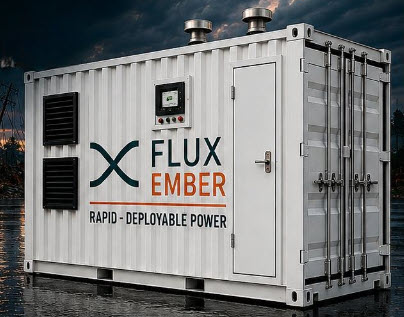
FLUX EMBER
Power
GTG 1000L AWG
Water Generation
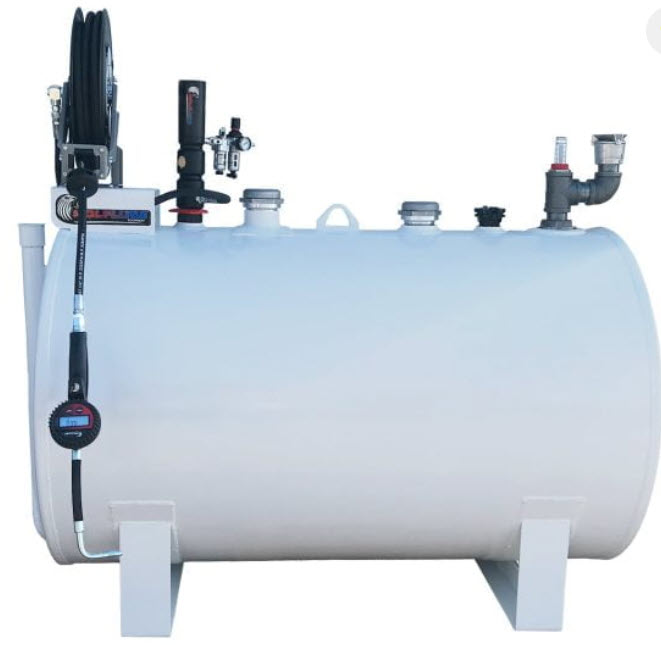
CNG FUEL TANK
120–1,000 gal
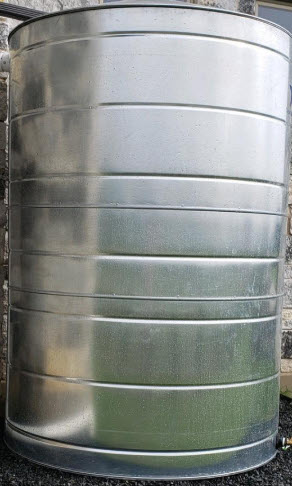
WATER STORAGE
Tank
← FRONT (HITCH) • TANDEM-AXLE FLATBED DECK • REAR →
Power, water generation, fuel, and storage integrate onto a single towable chassis — no crane or forklift required, deployable to any accessible site.
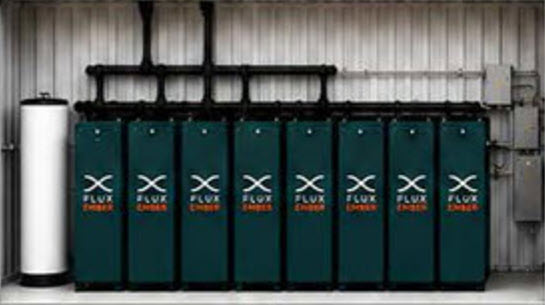
Measured at 3 ft — quiet operation ideal for populated, mission-critical environments like hospitals and housing.
Onsite fuel storage supports continuous operation for days, depending on tank capacity and site load.
Generates electricity while recovering thermal energy for space heating and hot-water needs.
| Max power output | 360 A @ 120 VAC |
| Continuous / peak output | 15 kVA / 27 kVA |
| SOFC generation | 12 kW |
| Energy availability | 288 kWh/day |
| Thermal output | 12.6 kW-th (122–185°F) |
| Noise level | < 50 dBA @ 3 ft |
| Fuel compatibility | NG / CNG / PNG / Bio-CNG / Methane |
One 20-foot transportable unit. Generation, battery storage, controls and thermal recovery — delivered, sited and running.
 TEMPORARY HOUSING
Provides electricity and useful thermal energy near temporary housing while avoiding the continuous noise associated with conventional generators.
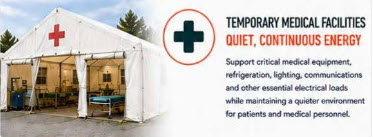 TEMPORARY MEDICAL FACILITIES
Supports critical medical equipment, refrigeration, lighting, and communications while maintaining a quieter environment for patients and staff.
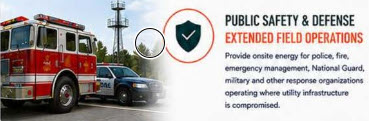 PUBLIC SAFETY & DEFENSE
Provides onsite energy for emergency response teams, mobile medical operations, temporary shelters, communications, security and other field operations where utility infrastructure is compromised or unavailable.
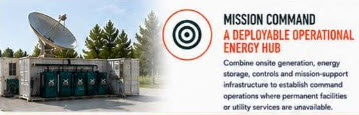 MISSION COMMAND
Combines onsite generation, energy storage, controls, and mission-support infrastructure to establish command operations where permanent facilities or utility services are unavailable.
Flux Ember and a GTG 1,000L Atmospheric Water Generator, integrated onto a single flatbed trailer — trailer-mounted, self-contained potable water and power generation for disaster response.
One trailer replaces roughly 15,000 half-liter bottles a day — and the convoy that hauls them.
Ambient air is drawn through a filtered intake, removing airborne particulates before processing.
Air is cooled below its dew point. Water vapor condenses and collects in the internal reservoir.
A seven-stage EZ-Filter™ chain: HEPA air, dual UV lamps, sediment, pre- and post-carbon, ultra-fine membrane, and mineralization.
Water meeting or exceeding WHO purity standards is dispensed or piped to storage reservoirs.
Per day at 30°C / 86°F and 80% relative humidity, meeting or exceeding WHO drinking water standards.
On a standard 250 gal CNG tank — tank options range from 120 gal (4.5 days) to 1,000 gal (29.2 days).
No crane or forklift required. Target time to first water is under 2 hours from site arrival.
| Trailer class | Tandem-axle flatbed |
| AWG dry weight | ~2,000 lb (920 kg) |
| CNG fuel tank | 250 gal standard (7.3-day runtime) |
| Tank options | 120 gal – 1,000 gal |
| Setup crew | 2 personnel, no crane required |
| Site requirement | Level pad, open airflow both sides |
Deck length, GVWR, tow class, and onboard potable storage capacity are finalized during trailer build-out and site-test validation.
Activation order received; unit is pre-staged and ready to tow.
Hitch to tow vehicle, secure load, depart staging depot — typically within 30 minutes.
Road-legal transit to incident site on standard highway.
Level, position for airflow, energize Flux Ember, start the AWG — typically 30 minutes after arrival.
Potable water dispensing begins and ramps to full rated output — target under 2 hours from alert.
Setup and first-water times are planning targets pending field validation of the integrated trailer build.
| Survival drinking water only | 333 people/day |
| Drinking and cooking | 181 people/day |
| Sphere minimum, all domestic uses | 66 people/day |
| Field medical / triage station | ~20 patients/day |
| Shelter supplemental supply | ~2,000 half-liter bottles offset |
A single unit meets the Sphere 15 L/person/day standard for a 66-person shelter indefinitely, with no source water and no resupply convoy.
Mains lose pressure and floodwater contaminates wells. The unit produces clean water on site while distribution is restored.
Supports evacuation centers and staging areas outside the burn zone where municipal supply is unavailable or reserved for suppression.
Chemical intrusion or a boil-water order renders existing supply unusable. Output is independent of the compromised source.
Sustains field medical stations, shelters, and staging camps beyond the reach of piped infrastructure.
| Factor | Bottled Water | Tanker Trucking | AWG Trailer Unit |
|---|---|---|---|
| Source dependency | Intact supply chain | Potable source & fill point | Ambient air only |
| Recurring logistics | ~2,000 bottles/day | Repeated round trips | Energy resupply only |
| Road access needed | Continuous | Continuous | Single trip in |
| Waste generated | High plastic volume | Minimal | None |
| Time to first water | Depends on convoy | Depends on fill & transit | Target under 2 hours |
The unit does not replace bulk distribution at scale — it removes the water-convoy dependency for shelters, staging areas, and isolated populations during the critical first phase of a response.
 Green Technology Global