 Green Technology Global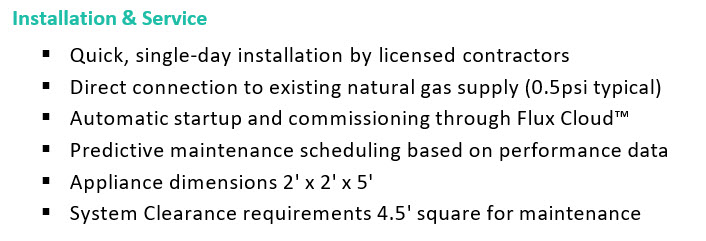
Why homebuyers are looking past the meter
Three pressures are converging on new-construction projects at once. Utility hookups and grid-capacity queues can stall a project's timeline, leaving lots sitting unsold while a community waits on infrastructure it doesn't control. At the same time, storms, outages and rising utility rates have buyers actively asking about energy independence — not as an add-on, but as a deciding factor in which community they choose. And clean, reliable, on-site power is something most competing communities simply can't offer, which makes it a story a sales team can lead with on the walkthrough rather than bury in a spec sheet.
On your schedule, not the utility's
On-site generation lets homes come online without waiting on utility hookups and grid-capacity queues.
Resilience is now a deciding factor
Buyers are asking about energy independence up front, not treating it as an optional extra.
A story your sales team can lead with
Clean, reliable, on-site power is memorable on the walkthrough and hard for competing communities to replicate.
A complete, integrated home power system
FLUX Home pairs a natural-gas solid oxide fuel cell with battery backup to generate and store electricity right at the home — designed to serve as the primary power source, not a backup generator. It runs continuously off a natural-gas connection, ties into the home's circuit breaker panel, and is sized to carry the household's full electrical load: lighting, HVAC, refrigeration, laundry, water heating and everyday electronics. The electric utility meter becomes optional, not essential.
< 45 dBA
Measured at 10 ft — quiet enough for a garage or side yard, indoor or outdoor rated.
~1 Day
Compact footprint installed alongside standard trade work — gas, electrical and panel tie-in.
2' × 2' × 5'
A single unit sized to the household's continuous power draw, not just backup loads.
Built into the home. Built into the sale.
Developers partnering with FLUX Home aren't adding an accessory — they're expanding what's buildable and how it sells.
Build where the grid can't keep up
Build on sites where grid capacity is limited or interconnection is slow. FLUX Home brings lots to market without waiting on utility infrastructure upgrades.
Standard equipment, not an add-on
Offer buyers on-site power as standard equipment — never presented as optional — that's memorable on the walkthrough.
A story that earns its own coverage
Position communities as forward-thinking and energy-independent — a story that earns media coverage and word-of-mouth on its own.
Prove it, then repeat it
Prove the model on the first homes, refine the process with trade partners, and roll it out as a standard offering across future phases.
One system, across every home you build
FLUX Home scales across a community's full product mix — sized to the load, not the floor plan. It serves as the primary power system for detached single-family homes of any size, installs compactly into townhomes and duplexes where exterior space is at a premium, gives model homes and sales centers a working showcase of energy independence during the walkthrough, and can power clubhouses, pools and other shared amenity centers independently of the grid, just like the homes around them.
Standard equipment, not an add-on
FLUX Home is specified into new construction like any other system in the home — installed during the build alongside HVAC, plumbing and electrical, not retrofitted or sold as an aftermarket purchase once the buyer has moved in. Its cost is included in the home's total construction price and financed over the mortgage term at mortgage rates rather than as a standalone loan, so buyers make one monthly mortgage payment that already accounts for their power system — no separate financing application, lease, or utility deposit to manage.
Installed by trained technicians, commissioned before move-in
Every FLUX Home unit is installed and commissioned on site as part of the standard construction process — tied into the home's gas, electrical and breaker panel connections, then tested and signed off before the buyer ever moves in. The unit is also remotely monitored with dispatchable operation, giving builders and homeowners visibility into performance and diagnostics from day one.
A grid-dependent home vs. a FLUX Home–powered one
- Power tied to utility interconnection and infrastructure capacity
- Subject to grid outages and utility rate increases
- Backup, if any, is a separate generator or battery add-on
- Homeowner is a rate-payer with no on-site generation
- Electricity generated on site from natural gas — independent of grid capacity
- Battery backup keeps power flowing through outages
- Sized and installed as the home's primary system from day one
- Cost is built into the home price and financed through the mortgage
A clear, collaborative path to launch
Explore the fit
Explore the community's goals, home designs and where on-site power fits the plan.
Align on the details
Align on technical requirements, siting, gas and electrical connections, and timeline.
Smooth commissioning
FLUX and trade partners support a smooth installation and commissioning process.
Roll it into future phases
Apply what's learned across additional homes and future phases.
For developers evaluating sites where interconnection is the bottleneck — or simply looking for a standard-equipment differentiator buyers will remember on the walkthrough — FLUX Home turns a utility constraint into a sales advantage, built into the home from the first day of construction.