The Threat of Extreme Weather is the "Achilles' Heel" of the Current National Rail Network.
The rail infrastructure across the United States is under constant siege from geography and extreme weather, revealing the critical shortcomings of traditional wooden railroad ties.
The U.S. rail network currently rests on an unsustainable foundation. Nationwide, there are approximately 700 million railroad ties installed, of which 20 million must be replaced each year, generating an annual expenditure that exceeds over 1.5 billion dollars. For critical transportation corridors, relying on traditional wooden railroad ties represents a National Security Risk, an operational vulnerability, a serious environmental liability, and a bottomless pit of maintenance expenses.
Our Solution: Future-Proof Infrastructure
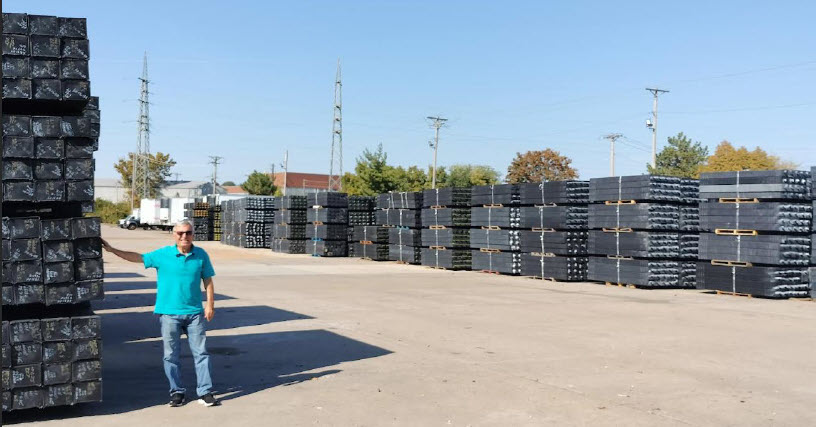
Materials Engineering and Composition
Our railroad ties are made from 100% recycled materials, creating a final product that is 100% recyclable. The structurally optimized formula consists of:
1. Approximately 60-70% of waste plastics.
2. Approximately 25-35% shredded rubber (from scrap tires) or other materials.
3. Between 5% and 15% proprietary additives to maximize cohesion and resistance. The implementation of our Composite Rail railroad ties (made from 100% recycled waste plastics and tires) in these critical corridors.
1.
Weather Immunity and Superior Stability: Our railroad ties do not absorb moisture, do not rot underwater flooding, and provide an unbreakable grip that resists the thermal stress of steel, drastically mitigating the risk of sun kinks in summer.
2.
Reduced Maintenance and Continuous Transit: By maintaining track stability, we enable faster train speeds safely and higher loads per rail car year-round.
3. Unsurpassed Economics (ROI): While wood requires a cost of ownership of $10 per unit per year, our sleeper technology reduces that cost to a maximum of $5 per year, offering a guaranteed 50-year lifespan.
4. Short Lifespan and Exorbitant Life Cycle Costs: Wooden railroad ties are inherently vulnerable to the elements; they deteriorate and rot easily. Due to this degradation, their lifespan is only 15 years. This constant need for replacement results in an extremely high life-cycle cost.
5. Toxicity and Public Health Risks: To try to prolong their precarious lifespan and resist rot and insect invasion, wooden railroad ties are treated intensively with dangerous chemicals. Specifically, they contain creosote and chromated copper arsenate. The great operational and civil liability risk lies in the fact that these toxic chemicals can leach into the surrounding soil, causing contamination of water sources.
6. An Environmental Liability at the End of its Life: Treated wood is far from a "green" product and is not easily recyclable. The problem is compounded when these railroad ties have to be discarded: at the end of their life, wooden railroad ties often burn out, releasing carcinogenic chemicals directly into the air. This exposes local communities and railway companies to increasingly stringent environmental regulatory scrutiny.
Superior Physical Performance and Extreme Durability
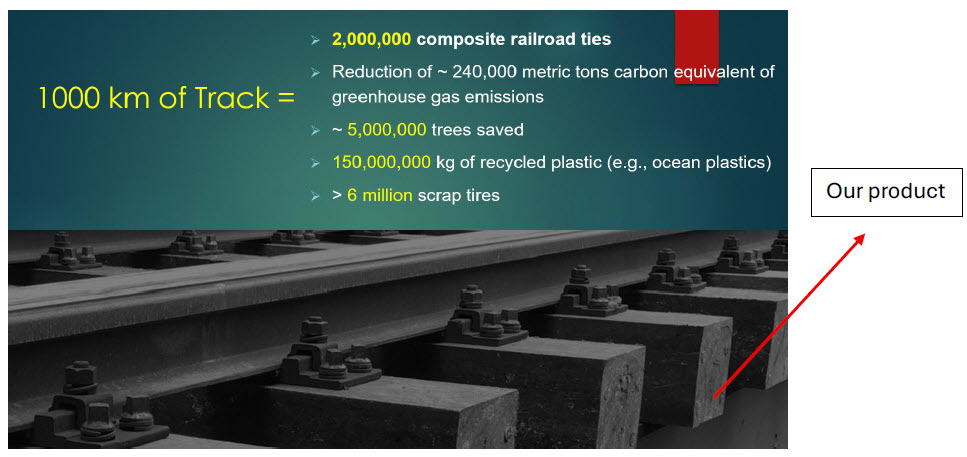
Unlike wood, our composite railroad ties are designed to master the harshest environments, directly solving the operational problems of modern railways:
1. Climate Immunity: They do not deteriorate or corrode due to exposure to the weather. They are completely resistant to rot, mold, mildew, and insect invasion, a crucial factor in humid areas.
2. Safety and Stability: They are non-combustible and have low electrical conductivity. In addition, they offer excellent lateral stability compared to wooden sleepers, which is critical to preventing sun kinks during extreme heat peaks.
3. Extended Lifespan: While wood fails at 15 years, our technology ensures an expected service life of ~50 years, with excellent damping and noise reduction characteristics.